
Lesson 28 Golden Week

Lesson 28 Golden Week
Topic Question: “What is Golden Week, and how do people in Japan spend it?”
▮ Try Answering the Question Yourself
Consider the significance of Golden Week in Japan, including when it occurs, why it’s important, and common activities or traditions associated with this holiday period.
▮ Sample Answer
“Golden Week is a series of holidays in late April and early May in Japan. People often travel, visit family, or enjoy outdoor activities. It’s a busy travel time nationwide.”
▮ Words to Learn and Their Meanings about Sample Answer
-Pronounce the Words Correctly (Pronunciation Training) + Make Sentences Using the Words Instantly
- Series (一連): A number of events, objects, or people of a similar kind or related nature coming one after another.
- Holidays (休日): Days of festivity or recreation when no work is done.
- Travel (旅行): To make a journey, typically of some length.
- Family (家族): A group consisting of parents and children living together in a household.
- Outdoor activities (アウトドア活動): Recreational activities engaged in outside, often in natural settings.
▮ Answer the Instructor’s Questions Based on the Sample Answer
- What is Golden Week in Japan?
- How do people typically spend Golden Week?
- Why is it a busy travel time?
▮ Mastering Middle School English Grammar
will 1
A:
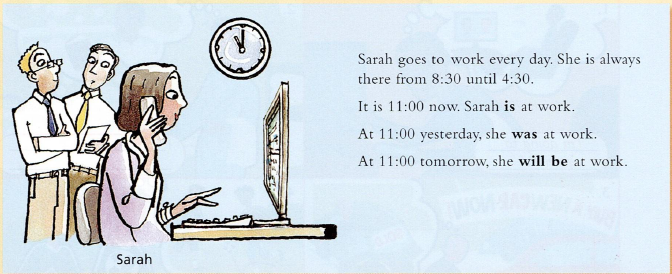
will + base form (will be / will win / will come, etc.):

’11 = will: I’ll (I will) / you’ll / she’ll, etc.
won’t = will not: I won’t (= I will not) / you won’t / she won’t, etc.
B: We use will for the future (tomorrow / next week, etc.):
● Sue travels a lot. Today she is in Los Angeles.T omorrow she’ll be in Mexico City.
Next week she’ll be in New York.
● I won’t be here tomorrow. (= I will not be here)
● Don’t drink coffee before you go to bed.You won’t sleep.
We often say I think … will… :
● I think Kelly will pass her driver’s t est.
● I don’t think it will rain this afternoon.
C: We do not use will for things we have already arranged or decided to do
● We’re going to the movies on Saturday. Do you want to come with us?
(not We will go)
Example Sentences:
- Many people will travel during Golden Week.
- I think the parks will be very crowded.
- We won’t stay home; we’ll visit our relatives in the countryside.
- Traffic will likely be heavy during Golden Week.
Make Sentences Based on the Above Example Sentences Yourself: